
Showing posts with label chickens. Show all posts
Showing posts with label chickens. Show all posts
Monday, January 4, 2016
Brrrr.....
Finally, winter temps are here. Today didn't get out of the 20s. So, a great day for harvesting. I spent about an hour all bundled up digging parsnips, carrots and beets.
 The chickens appreciated all the tops. I also pulled up some swiss chard and some weeds for the chickens. They had a pretty good day.

Sunday, June 14, 2015
Happier Chickens
The chickens have been in their winter quarters for far too long. We just couldn't decide on the best place to move them. The last two years we rotated the chickens around the pasture, but I want the grazing to be saved for the sheep. Finally, we ended up moving them to the area occupied by the goat run-in for the past two and a half years. This would allow the chickens to scratch up all the old bedding still there and allow the land to recover from years of goat manure.
 The chickens also moved back into their chicken tractor. Alan ended up replacing the trailer underneath the chicken coop. The old trailer had a bad tire (it basically blew out the whole side wall) and the wheels are old military wheels. Eventually we'll find old tires and rims for that trailer, but now the coop has a new trailer that had been floating around here for about a year (my husband collects trailers the way I collect animals.)
We needed the winter chicken coop for the new chicks and ducks. The chicks let me know last week they were growing out of their washtub in the outhouse.

Now they are living in the small coop, but are not very sure about going outside.
 The chicks and ducklings are in a fenced off corner of the new chicken run, allowing everyone to get to know each other before co-mingling.

We needed the winter chicken coop for the new chicks and ducks. The chicks let me know last week they were growing out of their washtub in the outhouse.
Now they are living in the small coop, but are not very sure about going outside.
Thursday, May 7, 2015
Ready for the Chicks
I spent part of today getting everything ready for the new chicks. We should be able to pick them up on Saturday. All the equipment was scrubbed and sanitized by the sun. The heat lamp was hung and just needs an extension cord from the house.
 The heat lamp is from Premier 1 and is so much sturdier and safer than those cheap metal ones. The picture doesn't show it but the cord coming from the base has a metal coil for about three feet to keep critters from chewing on it. It worked great in the barn during lambing.
And yes that is a toilet seat. The best space to have the chick brooder, other than under a broody hen, is the outhouse. It usually just gets filled up with all kinds of gardening paraphernalia so brooding the chicks is a good reason to clean it out.

And yes that is a toilet seat. The best space to have the chick brooder, other than under a broody hen, is the outhouse. It usually just gets filled up with all kinds of gardening paraphernalia so brooding the chicks is a good reason to clean it out.
Sunday, August 3, 2014
The New Chicken Waterer
Always on the search for a better chicken waterer, I am now trying the Plasson Bell waterer. I got mine from Cornerstone Farm Ventures.
 The hose goes to a five gallon bucket on the tongue of the chicken tractor trailer. When the chickens drink from the trough and the water level goes down a spring loaded mechanism senses the change in weight and the white elbow at the top of the red bell, there's another elbow on the opposite side, sends water down into the trough. The water is replenished in the bucket and it is so much easier to keep their water clean.
The chickens took to it right away and had no trouble making the changeover in waterers. I only had one small problem getting started. The waterer must hang to stay level and the trailer tongue is just barely tall enough, and then the trailer tire went flat and threw off the level and all the water ran out. Once the tongue was lifted a little more the problem was fixed and should be permanently fixed as soon as the tire is fixed.
This system won't work in freezing weather as the water in the tubing will freeze, but it is a real time saver for spring, summer and fall.
The chickens took to it right away and had no trouble making the changeover in waterers. I only had one small problem getting started. The waterer must hang to stay level and the trailer tongue is just barely tall enough, and then the trailer tire went flat and threw off the level and all the water ran out. Once the tongue was lifted a little more the problem was fixed and should be permanently fixed as soon as the tire is fixed.
This system won't work in freezing weather as the water in the tubing will freeze, but it is a real time saver for spring, summer and fall.
Friday, July 18, 2014
Chicken Jewelry
Our chickens are sporting a new look, bracelets. To keep track of which year the chickens were hatched I bought chicken bands. Last year's birds now have red bracelets. I really like the black sex link birds I have now and have three more coming along. As the birds get to be full size it will be very difficult to tell them apart, hence the bands.
 I crept into their coop at night and slipped the bands on while they were roosting. They got a little stirred up but nothing like I thought they would. I think they
 like tolerate them.
Monday, May 12, 2014
The New Babies are Here.
Saturday was pick up day for our new babies: three new chicks, three baby turkeys and two swedish ducks. Baby turkeys are still the most inquisitive.

Tuesday, October 29, 2013
Gardening with chickens-part II
I've been spending a lot of time in the garden catching up on all the things that didn't get done while we were focusing all our time and energy getting the old house sold. And the chickens are helping me.
 Here are my girls helping to clear the weeds from the garden. They, hopefully, are also eating up the chiggers as well. The garden, particularly the red raspberry patch, was the worst place for getting bitten by chiggers.
I planted garlic and shallots today. The hard part will be keeping the chickens from digging them up.
 Before I let the chickens into the garden space I fenced off the blueberry and gooseberry bushes. I planted the garlic and shallots in front of the gooseberries and was able to move the fence around the garlic as well. Although, after I put the straw bedding on the garlic the chickens came over and were trying to figure out how to get at the straw to start scratching around.
 In other poultry news, our one remaining Mottled Java is moulting and looks so pathetic.
 But all our old laying hens have a date with the butcher soon, along with our three remaining turkeys.
 We had an owl problem and lost a bunch of turkeys and sold our breeders before they were eaten as well. I hope to just have the nine new pullets and the three goats for the winter. And a busy winter it should be. We are getting estimates on building a barn and fencing in the pastures. Lots more to write about!

I planted garlic and shallots today. The hard part will be keeping the chickens from digging them up.


Tuesday, March 12, 2013
How to move raspberry bushes
Step 1: Buy a battery. (Because you know you have to set up the electric netting for the chickens .)
Step 2: Set up the electric netting. (Because you must move the chickens and their coop so it/they don't get hurt when the tree is trimmed.)
Step 3: Move the chickens.

Step 4: Take down the fence around the old chicken run. (Because you don't want to ruin the fencing when the tree limbs come down.)
Step 5: Drastically cut back the big Maple tree that casts a large amount of shade on the vegetable garden. (Because the big branches coming down will fall right where you want to move the raspberries.)


So the simple act of moving raspberries (which have taken over about 75% of the old veggie garden) turned into a multi-step process taking quite a few days. Hopefully, the tree trimming will be enough as we really didn't want to take down the old maple. And the chickens love having a larger pen with lots of grass to eat. Maybe my next post will be about the electric netting.
So step 6 will be removing the grass and adding compost to the new raspberry beds. Then I only have about 100 raspberry bushes to move. And those are just the ones I am keeping. I am giving away quite a few bushes to various gardening friends (thank you so much!)
Step 2: Set up the electric netting. (Because you must move the chickens and their coop so it/they don't get hurt when the tree is trimmed.)
Step 3: Move the chickens.

Step 4: Take down the fence around the old chicken run. (Because you don't want to ruin the fencing when the tree limbs come down.)
Step 5: Drastically cut back the big Maple tree that casts a large amount of shade on the vegetable garden. (Because the big branches coming down will fall right where you want to move the raspberries.)
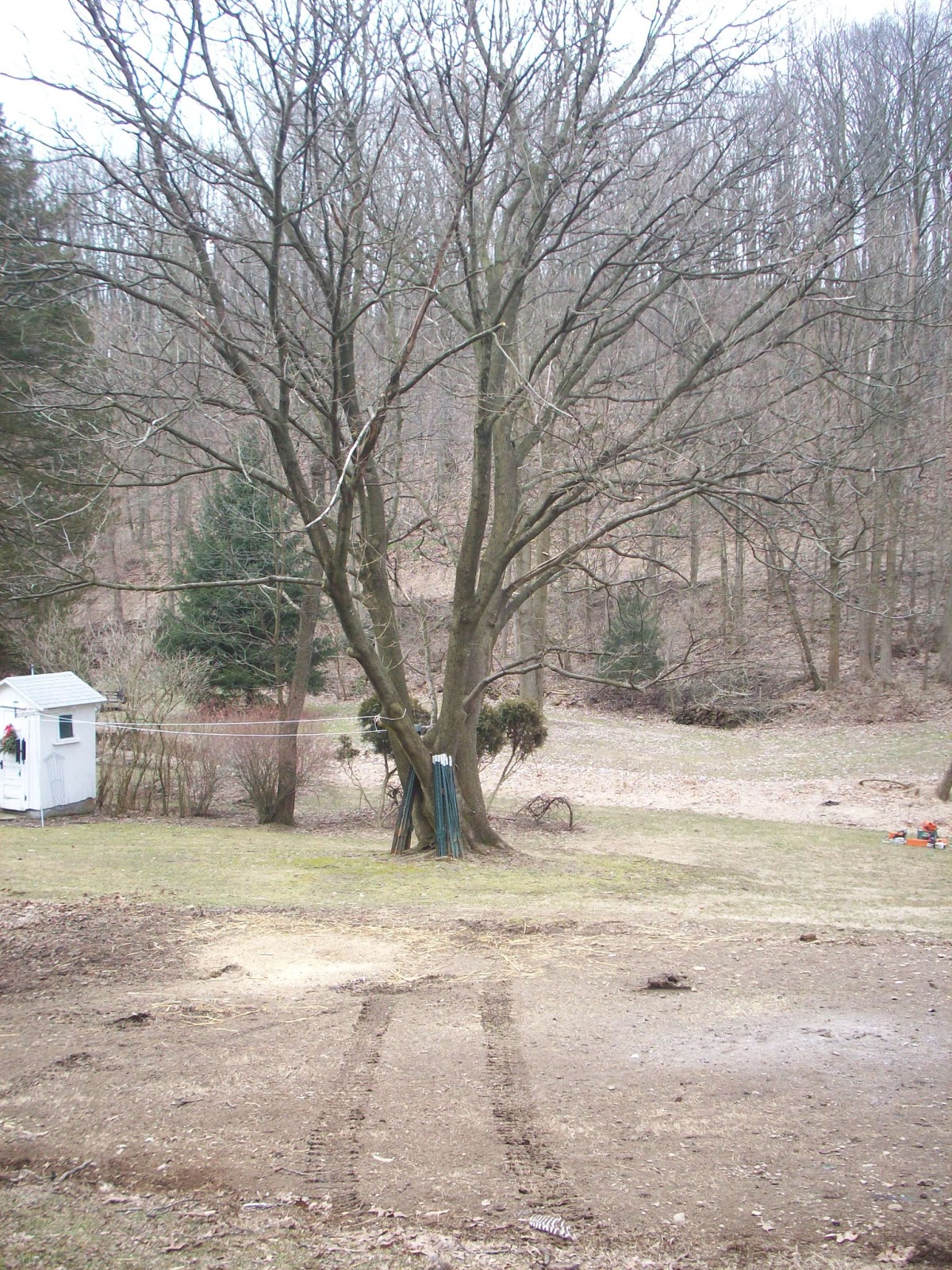

So the simple act of moving raspberries (which have taken over about 75% of the old veggie garden) turned into a multi-step process taking quite a few days. Hopefully, the tree trimming will be enough as we really didn't want to take down the old maple. And the chickens love having a larger pen with lots of grass to eat. Maybe my next post will be about the electric netting.
So step 6 will be removing the grass and adding compost to the new raspberry beds. Then I only have about 100 raspberry bushes to move. And those are just the ones I am keeping. I am giving away quite a few bushes to various gardening friends (thank you so much!)
Wednesday, February 20, 2013
The Groundhog was Right!
Even though its 26 degrees outside and we had a nasty mix of ice and slushy snow yesterday
 inside and in the hay house it is spring.
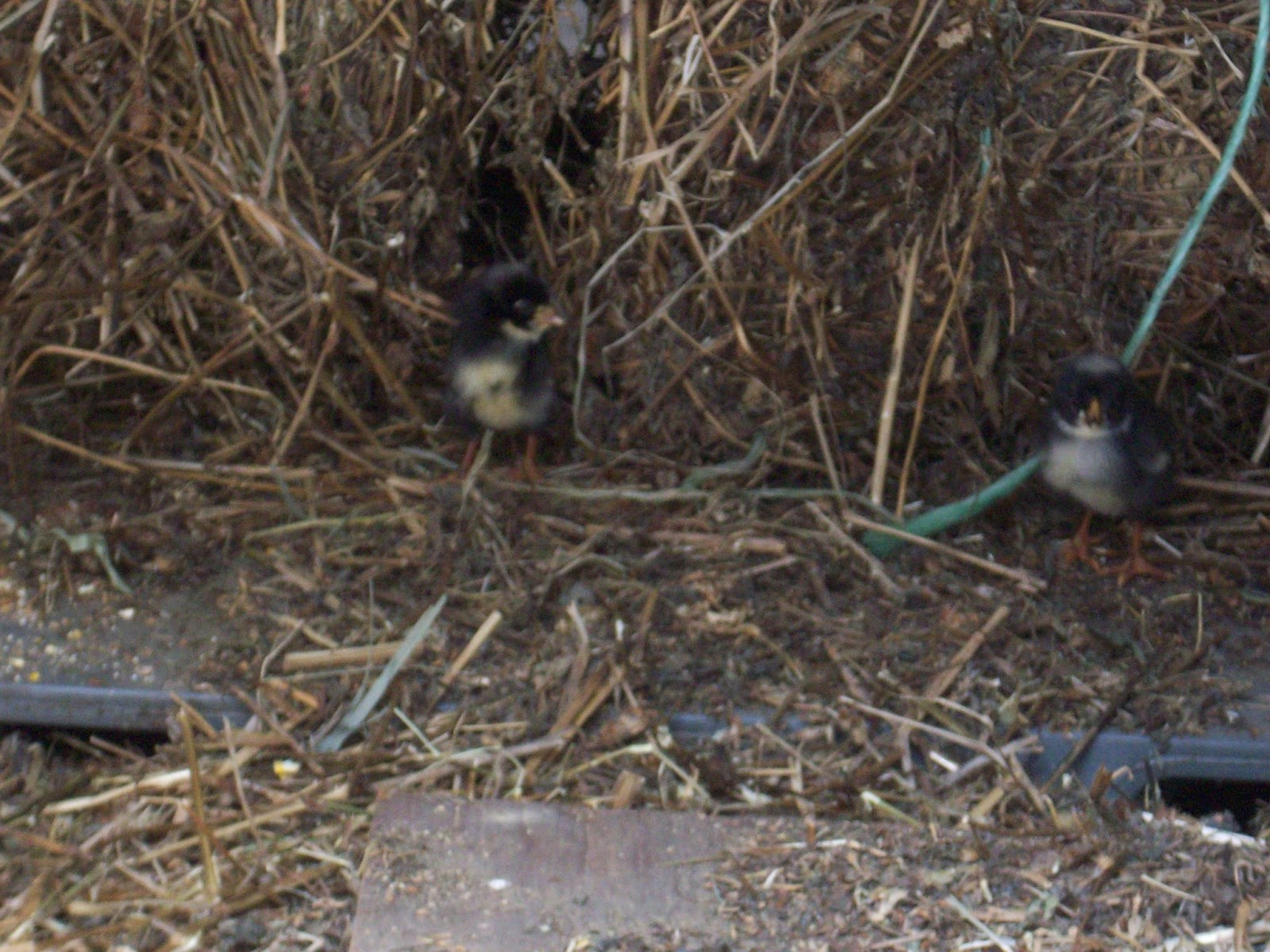
I was greeted by this sight this morning when I went out to feed:
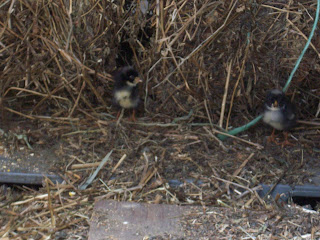 One of our Mottled Java hens has been missing for a while. We would see her about once a week or so and then nothing. Now we know where she has been. These 2 chicks were the only ones that hatched from her nest. I finally found her nest with seven rotten eggs. Not bad for the coldest part of the winter. We'll have to see how well she does mothering these two chicks. Since she was one of the chicks that was raised by our broody hen last spring she may be able to do it.

I was greeted by this sight this morning when I went out to feed:
Wednesday, November 21, 2012
Predators!
Today was an interesting day of predators. Our three Mottled Java hens do not like to stay in the pen and can fly pretty well, so they spend most of their day outside the chicken run. They like to hang out under the bird feeder and clean up the sunflower seeds. This morning I saw a lot of flapping going on at the edge of the stream on the other side of the bird feeders. A Red Tail Hawk was attacking one of the Mottled Java hens, and she was putting up a pretty good fight. There was lots of squawking going on as well. When I opened up the patio door the hawk took off. The hens hid under some arborvitae for the rest of the morning, but all of them were back to their normal activities by the afternoon.
When I went out to feed later this evening I spied a red fox moving slowly through the meadow near the chickens. I was able to grab a quick picture, then we scared it away with a lot of very loud noise.
 That;s the fox in nearly the middle of the picture. He/She is about 50 feet from the chickens who insist on staying outside the pen every day. I guess they need their wings clipped again to keep them in and safe.
When I went out to feed later this evening I spied a red fox moving slowly through the meadow near the chickens. I was able to grab a quick picture, then we scared it away with a lot of very loud noise.

Thursday, September 6, 2012
The chickens have arrived!
Today was the big day we moved the chickens. The day started last night when we got all the chickens we were moving into the coop (or thought we would until we found out that the Dominiques were sleeping in the trees, in the meadow and who knows where else). We rounded up all but 2 of the chickens we would be moving in the coop. Just before dawn I was able to get one more chicken into the coop and get the other one into the pen. My husband was at the rental place at 7AM to get the car trailer we needed to haul the chicken coop/trailer. Once the coop was loaded onto the car trailer I was able to catch the last chicken and off we went.
 Thank you Ted for hauling our coop around.

 It was funny following our chickens in their coop down the interstate.
 They were eager to get out after being cooped up in their coop until noon. But first each one had its wings clipped so hopefully they will stay in the relative safety of the pen.
 First thing each bird did was start to eat grass. Our old house was too shady to grow any strong grass.

 Home Sweet Home for the chickens. Now on to building a cage for transporting goats!


Thursday, August 2, 2012
13 days!!! (Or how the chickens can help with the move)
Time is going by so quickly now. Between work, packing, painting, and working on the outside of our old house we are keeping very busy. And still the requests for paper work keep coming from the mortgage company. Really, you want a paper trail from the deposit from May 17th? Well, I didn't think I would need a copy of my income tax refund check, and, by the way, you have a copy of our 2011 income tax return with the refund amount. Isn't that enough??? No, they want a copy of the check, and documentation of the cash as well and where it came from!!! Can I say how much I hate banks right now?
Packing, packing and more packing. And another pile of boxes of things to donate. But it is finally getting to the fun part where you start to see a difference. My youngest and I stripped wallpaper from the walk-in closet in the master bedroom (long story how it ended up with wallpaper) then I painted that closet and the other one in the master bedroom. Looks so much better. My brain is churning with designs for closet organizers.
The front porch is almost done. We just need to wash the ceiling and see if it needs a touch up paint job. The back porch/breezeway is done as well. Although, we do want to paint the steps there but that won't be done until we move out as they will stay nicer it we aren't using them all the time to go out to the animals.
I am starting to finalize moving plans for the animals. I need a temporary pen for the chickens and realized I can build that where I want to expand the vegetable garden next spring. The chickens will do a nice job digging up all the grass and tilling the soil a little. And the manure they will leave won't hurt either. I am considering leaving my oldest hens at the old house to till up the current vegetable garden once the harvest is over. They already sleep in a different, and smaller, hen house from the other hens and aren't laying many eggs any more. This can be their last job before the stew pot.
Well, off to the bank to get the "paper trail."
Packing, packing and more packing. And another pile of boxes of things to donate. But it is finally getting to the fun part where you start to see a difference. My youngest and I stripped wallpaper from the walk-in closet in the master bedroom (long story how it ended up with wallpaper) then I painted that closet and the other one in the master bedroom. Looks so much better. My brain is churning with designs for closet organizers.
The front porch is almost done. We just need to wash the ceiling and see if it needs a touch up paint job. The back porch/breezeway is done as well. Although, we do want to paint the steps there but that won't be done until we move out as they will stay nicer it we aren't using them all the time to go out to the animals.
I am starting to finalize moving plans for the animals. I need a temporary pen for the chickens and realized I can build that where I want to expand the vegetable garden next spring. The chickens will do a nice job digging up all the grass and tilling the soil a little. And the manure they will leave won't hurt either. I am considering leaving my oldest hens at the old house to till up the current vegetable garden once the harvest is over. They already sleep in a different, and smaller, hen house from the other hens and aren't laying many eggs any more. This can be their last job before the stew pot.
Well, off to the bank to get the "paper trail."
Wednesday, June 20, 2012
Gardening with chickens
I loved my compost pile. It's a great way to turn kitchen scraps, garden waste, weeds, grass clippings and leaves into valuable fertilizer for the garden. The only problem was our dog at the time. Maggie was a great dog, but she loved to dig through the compost. Her favorite things to eat were whole corn cobs (looked great coming out the other side!) So the pile was fenced making it difficult to turn the pile so everything would break down into that black gold otherwise known as compost.
 But then I got chickens. Throw the kitchen scraps, even meat which is a no no in regular compost piles, into the chickens and they gobble it right up, and given you great eggs in return. My chickens come running when I am carrying anything because I might have scraps for them. Chickens love to graze on grass but I am limited space wise in what sort of grazing I can give them. I have 2 fenced areas that I can open and shut doors to allow them to graze. But the spaces are small and the chickens only get about a week's worth of grazing on each area, then the area must rest for about 2-4 weeks depending on the weather so there is enough green for the chickens to graze again. Here's one area that I have let them on for a day or two. My neighbor dumps his grass clippings on our property so I can feed them to the chickens. They love them and I know he doesn't use any chemicals on his lawn so the clippings are safe.
 Here is the other area that has been resting and regrowing.

My chickens also serve another purpose. They are the protectors of my garden. Including the grazing areas, about 90% of the garden is surrounded by chickens. The chickens patrol this area eating bugs, keeping the weeds down, and keeping out the mice, voles, and bunnies. I have seen the chickens kill a mouse that gets into their pen. I am not sure what they would do to a rabbit, but I don't think the rabbit would stick around long enough to find out. Here is the back side of the garden with its chicken run.
 In the fall the chickens get all the leaves raked into their pen. Over the winter we sprinkle chicken scratch on top of the leaves and the chickens stay occupied for many hours scratching around for the grains and any bugs they may find. In the spring I have a pretty nice compost ready for the garden. And I didn't have to bag up my leaves for the trash or burn them or have to get them shredded and have to keep turning them to get compost. And the compost is evenly mixed with rotted chicken manure. My garden loves it!
 Even the goats help out in the garden. Their bedding is perfect for mulching and is premixed with a pelletized natural fertilizer AKA goat manure. While we could milk our does if we bred them, they do a nice job in the brush control department and they are just plain entertaining. And last fall when we had the snowstorm that brought down all the branches the goats were in charge of cleaning up. We put all the branches in the goat pen and they goats stripped all the leaves off and then the bark. Kept the goats busy for weeks and we saved on hay.


Wednesday, June 13, 2012
Predators
Last Friday night we got a call from our oldest, while we were in Virginia, telling us we lost 2 Narragansett turkey poults. He heard the chickens making a lot of noise and when he investigated he saw something large fly out of the turkey pen, which is covered with chicken wire by the way. The chicks in the next pen over, without a covering of chicken wire, were fine but nervous. So now we are back to closing the little house up at night to keep the turkeys better protected. They don't seem to mind this much, but the chicks are very happy to get let out in the morning. Here are the remaining three turkeys basking in the evening sun.

We have been fairly lucky at our current home when it comes to predation. Last year we lost one turkey to what we think was a fox. Years ago we lost a few chickens to raccoons. Having the goats seems to help keep predators away. But with the move I am concerned about the number and type of predators at the new house. Being surrounded on three sides by state game lands should mean quite a few predators. I know there are a lot of deer in the area so the gardens will need stout fencing. We will definitely use our current garden fencing set up. We have a 3 foot wide fenced path around 3/4 of the garden that connects to the chicken pen. The compost pile is at the far end away from the chicken coop. When the chickens see me coming with kitchen scraps they come running down the path to get the goodies; they look like little velociraptors. The chickens spend their day moving around the outer perimeter of the garden eating bugs that are trying to get into my garden and keeping the weeds down. And the deer are afraid to jump into such a small area. We have a deer highway about 150 feet from our garden and I have never had a deer in my vegetable garden. Plants that are not in this fenced area have a much harder time with the deer. The deer will even come right up to the house and eat the impatiens growing next to my back door.
Coyotes are becoming a problem in the area; but, knock on wood, I haven't seen any here. I suspect they may be an issue at our new home. So now I am trying to think of all the options for protecting my animals.
Fencing is the first line of defense. I will have three separate pasture areas to fence and have been thinking of using a strong perimeter fence around the entire back of the property and then using a portable electric netting to close off smaller areas for rotational grazing. I really want to try my hand at rotational grazing as everything I have read about the benefits has made sense to me. Here is a link to a nice article by the USDA on fencing and other methods of predator control USDA's Sheep 201 .
Livestock guard animals would be a good second line of defense. Certain breeds of dogs are bred to become part of a flock and protect it. And they are pretty cute also
Livestock guard dogs-image from Wikipedia

Llamas are also used and they are the least costly option and live a long time. Image from Wikipedia

Donkeys also can protect their "flock" from predators, are cheaper than dogs but need more maintenance esp of their hooves.

Image from predator-friendly-ranching.blogspot.com
Here is another nice article on livestock guard dogs, llamas and donkeys
Oh what to do?

We have been fairly lucky at our current home when it comes to predation. Last year we lost one turkey to what we think was a fox. Years ago we lost a few chickens to raccoons. Having the goats seems to help keep predators away. But with the move I am concerned about the number and type of predators at the new house. Being surrounded on three sides by state game lands should mean quite a few predators. I know there are a lot of deer in the area so the gardens will need stout fencing. We will definitely use our current garden fencing set up. We have a 3 foot wide fenced path around 3/4 of the garden that connects to the chicken pen. The compost pile is at the far end away from the chicken coop. When the chickens see me coming with kitchen scraps they come running down the path to get the goodies; they look like little velociraptors. The chickens spend their day moving around the outer perimeter of the garden eating bugs that are trying to get into my garden and keeping the weeds down. And the deer are afraid to jump into such a small area. We have a deer highway about 150 feet from our garden and I have never had a deer in my vegetable garden. Plants that are not in this fenced area have a much harder time with the deer. The deer will even come right up to the house and eat the impatiens growing next to my back door.
Coyotes are becoming a problem in the area; but, knock on wood, I haven't seen any here. I suspect they may be an issue at our new home. So now I am trying to think of all the options for protecting my animals.
Fencing is the first line of defense. I will have three separate pasture areas to fence and have been thinking of using a strong perimeter fence around the entire back of the property and then using a portable electric netting to close off smaller areas for rotational grazing. I really want to try my hand at rotational grazing as everything I have read about the benefits has made sense to me. Here is a link to a nice article by the USDA on fencing and other methods of predator control USDA's Sheep 201 .
Livestock guard animals would be a good second line of defense. Certain breeds of dogs are bred to become part of a flock and protect it. And they are pretty cute also
Livestock guard dogs-image from Wikipedia
Llamas are also used and they are the least costly option and live a long time. Image from Wikipedia
Donkeys also can protect their "flock" from predators, are cheaper than dogs but need more maintenance esp of their hooves.
Image from predator-friendly-ranching.blogspot.com
Here is another nice article on livestock guard dogs, llamas and donkeys
Oh what to do?
Monday, May 28, 2012
Moving the animals and the hoop house

When we bought our newer chicken coop we had recently acquired an old trailer missing its decking. The coop fit perfectly on top. All we need to do is winch the trailer onto our road legal trailer and drive away. We might even move the coop with all the birds inside.


We have also used cattle panels to make a temporary hay storage area and a greenhouse. Surprisingly, our tarp covering the "hay hut" has lasted 3 years. All we'll need to do when we move the hay hut is throw away the tarp, disconnect the boards along the bottom holding the shape and load it up on the trailer.
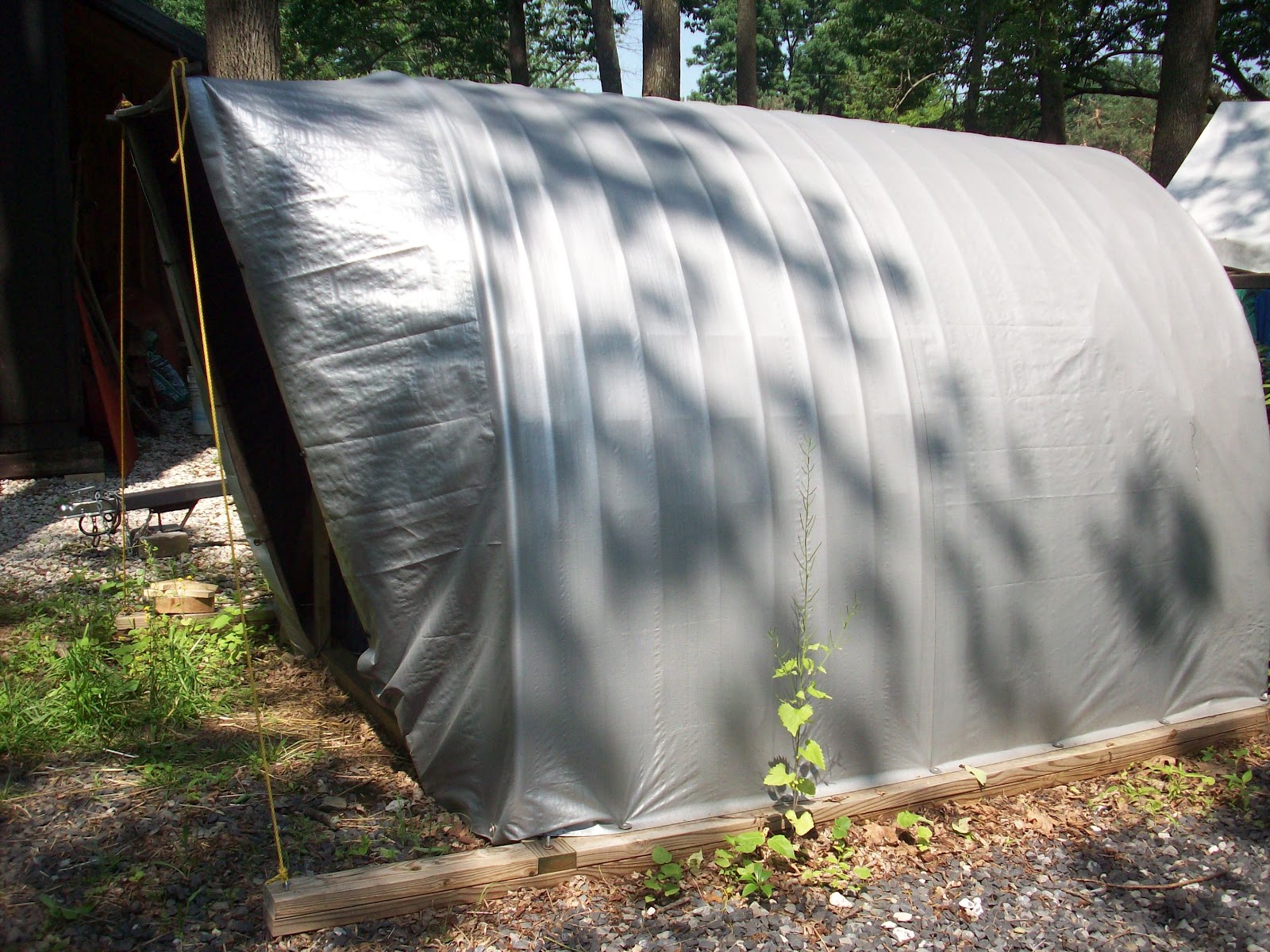
The greenhouse or "hoop house" was a fun project and one I am definitely not leaving behind. Right now it is approx 8x9, but I would like to add one more cattle panel and make it 8x14. Hopefully we will be able to reuse the plastic. When we first built the hoop house I used regular plastic because I had a bunch left over from another project. That lasted one year and then disintegrated in the sunlight. Greenhouse plastic was really not any more expensive than regular plastic and has held up beautifully. I could probably get another couple years out of it but we'll see how the plastic survives being taken off then put back on. If I end up making the hoop house larger then I'll probably get another whole sheet again and use the older plastic for some smaller hoops for seasonal protection in the garden.

Cattle panels are useful for so many things. I am glad we have purchased so many over the years. Cattle panels are nearly indestructible by the goats, although a few are a little bowed from the goats rubbing along them. Chickens and baby goats can easily get through the panels but we have put chicken wire along the bottoms of the panels in the chicken run and coated 2inch by 4inch 2ft tall wire on the bottom of the panels in the goat pen. Moving the animals is something that will have to be done fairly quickly once we get started, and is the main thing that must happen before we can start staying at the new house.
Subscribe to:
Posts (Atom)