Lots of little things going on here.
Alan has been working on the bridge. All that is left is the decking and a board along the top/railing.
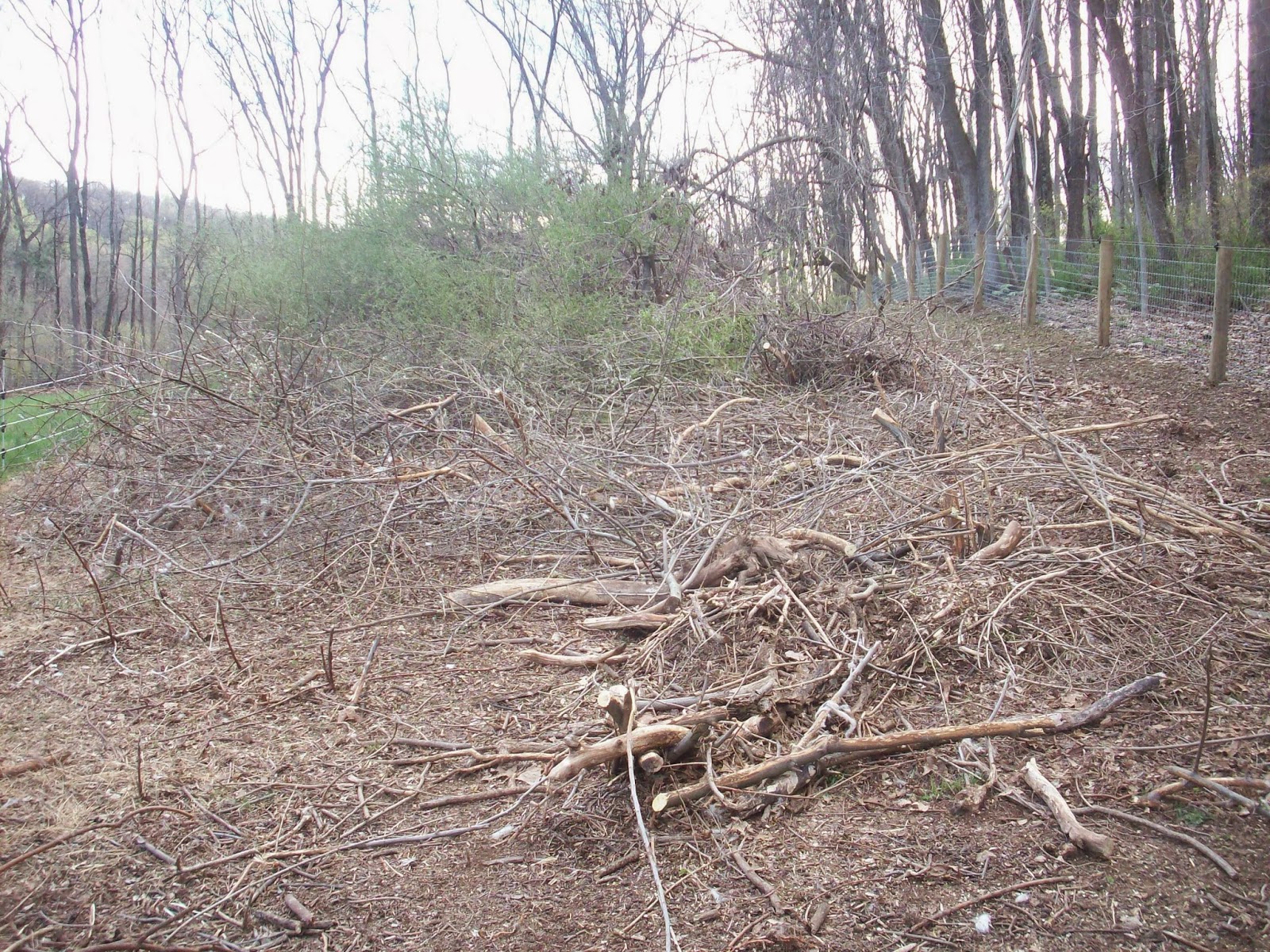
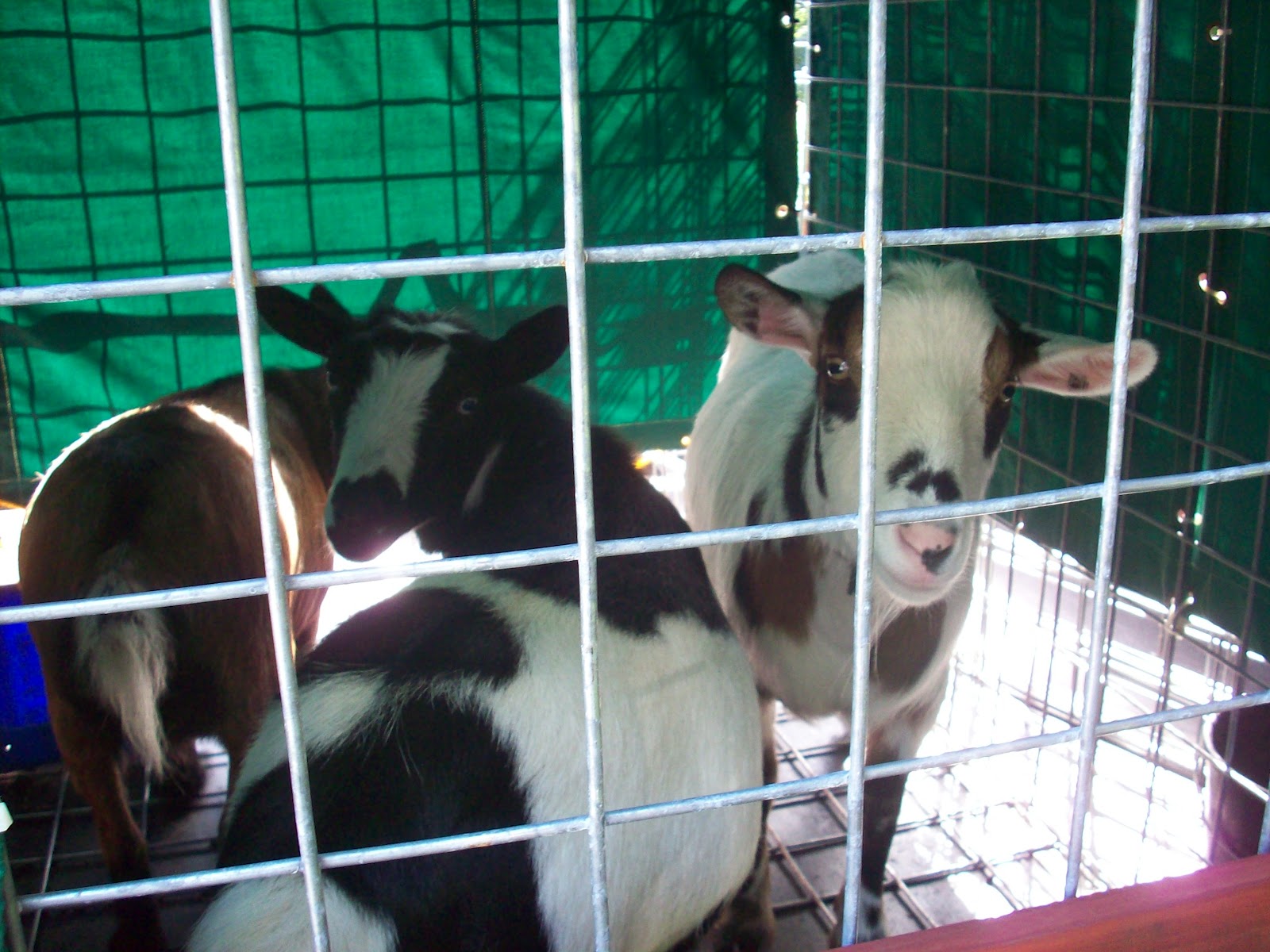
The goats have been working on clearing brush.
They get quite acrobatic to get the tasty bits.
Mama Sadie is working on shedding, and looking quite shaggy.
The lilacs are working on perfuming the air with their amazing scent.
This long stand of lilacs is on the bank behind the house. With the patio doors open the smell of lilacs comes right into the house. It's heavenly.
And Stumpy is working on getting to used to her crate. She has been eating in it for a few days and has even gone all the way in.
The hard part is figuring out the best time to catch her and her kittens. She moved them a few days ago and I know the general vicinity but I think I'll let her raise them up a little more. But we can't wait to see them!
Showing posts with label goats. Show all posts
Monday, May 11, 2015
Saturday, April 25, 2015
Expanding the Pasture
Alan got to play with the drag harrow today; after using his ratchet rake to pull out all the little stumps from the area the goats cleared at the top of their old pasture. He has always said he doesn't want to be a farmer, but he sure does have fun with all the equipment!
This work today adds at least 50 x 150 feet to the top of the pasture. There is still about 250 feet left to go in this upper field and the goats are getting to work on that. They've done a pretty good job so far. Still over 200 feet to go though.
Next task up is seeding this area, but that will depend on the weather.
This work today adds at least 50 x 150 feet to the top of the pasture. There is still about 250 feet left to go in this upper field and the goats are getting to work on that. They've done a pretty good job so far. Still over 200 feet to go though.
Next task up is seeding this area, but that will depend on the weather.
Friday, April 10, 2015
FAMACHA Training
Wednesday evening Maddy and I went to a FAMACHA training class put on by Penn State and held at the sheep barn at Delaware Valley University. FAMACHA is a diagnostic tool useful in determining which sheep/goats need deworming. The program is based on assessing the color of an animal's mucous membranes (mostly the lower eyelid) using a patented color card to diagnose anemia. Anemia is very helpful in assessing for barber pole worm infection.
The barn itself was impressive. There were at least three different types of sheep (we didn't go through the whole barn) and I was able to get some pictures of the hay mangers I want to build.
Side view-
The course started with a power point presentation covering internal parasites, their life cycles, management techniques to prevent the spread of worms, etc. Dr Wolfgang, from Penn State, spoke in a little more depth on other principles of management including refugia and Targeted Selective Treatment (TST.). Refugia is the term for populations of worms in untreated sheep and the subsequent larvae on pastures. Leaving worms that have not been exposed to the anthelmintics helps to reduce build up of resistance to wormers by diluting the numbers of worms that survive treatment. Another part of TST is FAMACHA scoring.
We then went over to the sheep and assessed the color of the mucous membranes of the lower eyelid of a sheep.
She was very cooperative!
Inside the classroom the assistants had been busy preparing fecal egg count slides from the fecal samples the participants brought. They also showed us how to prepare samples ourselves. Of course my sheep sample was the only sample with worm eggs, 1750! At least the goat sample I brought was clean. Dr Wolfgang gave some recommendations for treatment and I'll be getting the vet out, again.
I have been mulling over in my mind how to do my own fecal egg counts. It is recommended to keep a "low background parasite burden" and only treat animals when necessary i.e., if becoming anemic. This strategy should help decrease the development of resistance to anthelmintic drugs. But having the vet's office do routine fecal egg counts on all my sheep and goats on a routine basis could get expensive. Preparing the sample is not that difficult and only requires a few simple tools. The most costly tool is a microscope. I am spoiled by the microscopes at work so a cheap microscope might just be too frustrating for me.
All in all it was a great class and we learned a ton of very useful information. When I look back to what I knew about sheep four months ago I see huge growth, but there is still a long way to go.
The barn itself was impressive. There were at least three different types of sheep (we didn't go through the whole barn) and I was able to get some pictures of the hay mangers I want to build.
Side view-
The course started with a power point presentation covering internal parasites, their life cycles, management techniques to prevent the spread of worms, etc. Dr Wolfgang, from Penn State, spoke in a little more depth on other principles of management including refugia and Targeted Selective Treatment (TST.). Refugia is the term for populations of worms in untreated sheep and the subsequent larvae on pastures. Leaving worms that have not been exposed to the anthelmintics helps to reduce build up of resistance to wormers by diluting the numbers of worms that survive treatment. Another part of TST is FAMACHA scoring.
We then went over to the sheep and assessed the color of the mucous membranes of the lower eyelid of a sheep.
She was very cooperative!
Inside the classroom the assistants had been busy preparing fecal egg count slides from the fecal samples the participants brought. They also showed us how to prepare samples ourselves. Of course my sheep sample was the only sample with worm eggs, 1750! At least the goat sample I brought was clean. Dr Wolfgang gave some recommendations for treatment and I'll be getting the vet out, again.
I have been mulling over in my mind how to do my own fecal egg counts. It is recommended to keep a "low background parasite burden" and only treat animals when necessary i.e., if becoming anemic. This strategy should help decrease the development of resistance to anthelmintic drugs. But having the vet's office do routine fecal egg counts on all my sheep and goats on a routine basis could get expensive. Preparing the sample is not that difficult and only requires a few simple tools. The most costly tool is a microscope. I am spoiled by the microscopes at work so a cheap microscope might just be too frustrating for me.
All in all it was a great class and we learned a ton of very useful information. When I look back to what I knew about sheep four months ago I see huge growth, but there is still a long way to go.
Monday, April 6, 2015
Moving the Goats
Moving the goats into the new brush area was our big job for Easter weekend. First we strung up three rows, each 220 feet long, of electric polyrope to keep them in the area. Of course we had helpers!
The goats' new pen is full of brush we need them to eat. Over 6000 sq feet of brush!
The next job was to move our old "hay hut" (made from two cattle panels on a frame) up to the new pen. This necessitated hauling the hay hut up a hill with a total elevation of about 50 feet. We had hoped to be able to put it on a trailer and use the tractor to get it up the hill but the ground was just damp enough to be too slippery for the tractor.
So first we tried carrying it. Yeah, that was NOT going to work. Then we tried putting a hand truck under one end to take some of the load. Not good enough. Finally, with two hand trucks and a really long rope attached to the tractor up in the more level field at the top of the hill we were able to make progress.
Here we are about halfway up the hill. The rope was so long the tractor was up against the fence and we had to shorten the rope. That's when I fell and cracked my knee. Bending is still very uncomfortable.
You won't be trying to eat the rope once it's electrified!
The goats' new pen is full of brush we need them to eat. Over 6000 sq feet of brush!
The next job was to move our old "hay hut" (made from two cattle panels on a frame) up to the new pen. This necessitated hauling the hay hut up a hill with a total elevation of about 50 feet. We had hoped to be able to put it on a trailer and use the tractor to get it up the hill but the ground was just damp enough to be too slippery for the tractor.
So first we tried carrying it. Yeah, that was NOT going to work. Then we tried putting a hand truck under one end to take some of the load. Not good enough. Finally, with two hand trucks and a really long rope attached to the tractor up in the more level field at the top of the hill we were able to make progress.
Here we are about halfway up the hill. The rope was so long the tractor was up against the fence and we had to shorten the rope. That's when I fell and cracked my knee. Bending is still very uncomfortable.
Almost there!
The goats and sheep checking out their new home.
We plan to put galvanized metal roofing panels over the arch, but the tarp will suffice for now. Next step is to get hoses up there. It's a long walk carrying water!
Tuesday, March 31, 2015
Clearing Brush
Over the years our pastures have been encroached upon by the brush growing out of the woods. We can probably increase the size of our grazing area by at least 15-20% by clearing back the brushy areas. We already cleared a good bit of brush before the fencing was installed. Now we need to get to work on the main pasture areas. Time for the goats and sheep to get to work!
Here is an example of one of our areas in need of clearing (probably a good 25 feet wide and 10 feet tall and many, many feet long):
The first area we put the goats to work on is now looking like this:
We have to pull up the stumps and roots and seed but already the pasture looks so much bigger!
Here is an example of one of our areas in need of clearing (probably a good 25 feet wide and 10 feet tall and many, many feet long):
The first area we put the goats to work on is now looking like this:
We have to pull up the stumps and roots and seed but already the pasture looks so much bigger!
Sunday, March 15, 2015
Mapping It
Maddy has a degree in Geography and made us a great map of our property. I then added a bunch of details, so anything that looks amateurish is my handiwork and not my daughter's work.
The map helps to demonstrate the hilliness of our property. The bottom corner is the highest elevation and the stream runs along the lowest part of our little valley. The stream also loses about 5 or 6 feet as it runs down towards the house (at the top of the image.)
In this close up of the area around the house it is easier to see the elevation lines. The bottom right corner of the house faces pretty much towards the south.
The area right around the house and on either side of the stream is fairly level . Across the stream from the house is the firewood processing area.
The back or farm part of the property is much hillier.
The green shaded areas are woods and/or shrubby areas. The pastures, in white, are slowly being encroached by brush. This year's task for the goats and sheep is to clear back the brush so we can expand the pastures back to their original size. We should be able to increase the pastures by approximately 25% by clearing the brush. And we will make the goats very happy with that job too.
It is hard to see, but the pale, thin line around the perimeter of the back part of the property is the new fencing and the gray rectangle in the upper left is the barn. We will have three main pastures, the first on the south side of the stream, the other two split by the finger of green shaded area in the middle of the image. Each main pasture will then be managed intensively, moving the animals around with temporary electric fencing. I am excited to see how this all works. The chickens caught on quickly to the concept and would get all excited when I was moving their electric fencing. I am hoping the sheep and goats will be able to be out on pasture by May, but the snow had better start melting faster!
In this close up of the area around the house it is easier to see the elevation lines. The bottom right corner of the house faces pretty much towards the south.
The area right around the house and on either side of the stream is fairly level . Across the stream from the house is the firewood processing area.
The back or farm part of the property is much hillier.
The green shaded areas are woods and/or shrubby areas. The pastures, in white, are slowly being encroached by brush. This year's task for the goats and sheep is to clear back the brush so we can expand the pastures back to their original size. We should be able to increase the pastures by approximately 25% by clearing the brush. And we will make the goats very happy with that job too.
It is hard to see, but the pale, thin line around the perimeter of the back part of the property is the new fencing and the gray rectangle in the upper left is the barn. We will have three main pastures, the first on the south side of the stream, the other two split by the finger of green shaded area in the middle of the image. Each main pasture will then be managed intensively, moving the animals around with temporary electric fencing. I am excited to see how this all works. The chickens caught on quickly to the concept and would get all excited when I was moving their electric fencing. I am hoping the sheep and goats will be able to be out on pasture by May, but the snow had better start melting faster!
Wednesday, February 11, 2015
Our Second Vet Visit
Our second vet visit this afternoon was another round of sheep wrestling. I do think it went better than the first time though. Ram1's abscess was looking a whole lot better. The swelling and redness have gone done tremendously and there is just a little scab.
Beyla's abscess had begun to open and drain this morning. The vet lanced it and drained a lot of pus and blood, cleaned it up and gave her a shot of antibiotics. She still looks pretty pathetic! I had the vet take a sample for a culture just to make sure it's not Caseous Lymphadenitis, but she doesn't think it is. She thinks their immune systems are still down from their former home and everything should run its course. I hope she's right!
Moose and Chloe had their hooves trimmed. Moose's hooves were horrible, like elf shoes! Chloe was very good about having her hooves trimmed and the vet said they were much better than the others. Everyone got another shot of Ivermectin because we still have some itching/scratching going on. Leda looks like she is due in about a week or two so she did not get treated. The vet left me with a dose to give her after she lambs. She thinks their intermittent runny noses are a virus that also needs to run its course and agrees that the occasional bloody noses are from irritation. We are hoping Spring and grazing sets everything right.
Earlier this evening when I went to feed the goats Brigid was not eating and didn't look right. She was standing in the corner looking uncomfortable. She was very distended with her left side more so. I thought she might have bloat and sure enough all of her symptoms and physical findings agreed. Of course getting her to agree to the treatment was not so easy. I think I got enough olive oil into her and walked her around but she hasn't started passing gas yet. She didn't want me any where near her now so I figure if she's too good at getting away from me she must be improving. While I was giving Brigid her oil our other sheep, Mama Sadie, kept trying to get me to pay attention to her. She let me scratch her all over and asked for more. She has NEVER done that! Maybe she's finally getting tame.
Beyla's abscess had begun to open and drain this morning. The vet lanced it and drained a lot of pus and blood, cleaned it up and gave her a shot of antibiotics. She still looks pretty pathetic! I had the vet take a sample for a culture just to make sure it's not Caseous Lymphadenitis, but she doesn't think it is. She thinks their immune systems are still down from their former home and everything should run its course. I hope she's right!
Moose and Chloe had their hooves trimmed. Moose's hooves were horrible, like elf shoes! Chloe was very good about having her hooves trimmed and the vet said they were much better than the others. Everyone got another shot of Ivermectin because we still have some itching/scratching going on. Leda looks like she is due in about a week or two so she did not get treated. The vet left me with a dose to give her after she lambs. She thinks their intermittent runny noses are a virus that also needs to run its course and agrees that the occasional bloody noses are from irritation. We are hoping Spring and grazing sets everything right.
Earlier this evening when I went to feed the goats Brigid was not eating and didn't look right. She was standing in the corner looking uncomfortable. She was very distended with her left side more so. I thought she might have bloat and sure enough all of her symptoms and physical findings agreed. Of course getting her to agree to the treatment was not so easy. I think I got enough olive oil into her and walked her around but she hasn't started passing gas yet. She didn't want me any where near her now so I figure if she's too good at getting away from me she must be improving. While I was giving Brigid her oil our other sheep, Mama Sadie, kept trying to get me to pay attention to her. She let me scratch her all over and asked for more. She has NEVER done that! Maybe she's finally getting tame.
Friday, January 16, 2015
Goat Tote Update
When we moved the goats to the new house we built this goat tote. We realized after a few trips that the connectors to attach the panels together weren't as strong as we would like. While shopping recently at our favorite Mennonite bulk foods store, Echo Hill, we saw their sheep fence with some new hinges. These wire panel connector hinges from Premier 1 attach two panels together and act as a hinge. Because they go through each panel opening they hinge the two pieces along the entire length.
We ordered some and Alan wasted no time beefing up the Goat Tote.
We used the connector hinges to hold all the panels together and act as the hinge for the door.
We will feel much more confident that the tote won't fall apart while we are transporting animals!
We ordered some and Alan wasted no time beefing up the Goat Tote.
We used the connector hinges to hold all the panels together and act as the hinge for the door.
We will feel much more confident that the tote won't fall apart while we are transporting animals!
Monday, September 8, 2014
8960 Square Feet
That's how much new pasture we added to the sheep and goats' pen.
We will be getting the entire pasture area fenced, but that won't happen for about two months and the sheep needed more grazing.
Alan put his tractor to good use today. He recently purchased a fork lift attachment that made hauling all the cattle panels around much easier.
Thor wasn't too sure about the tractor though.
He has never had the tractor in his pen and was not taking too kindly to it.
All in all the animals are enjoying their new grazing and browsing area. Thor was sleeping so deeply when I went out to feed last night that he almost missed eating his grain.
We will be getting the entire pasture area fenced, but that won't happen for about two months and the sheep needed more grazing.
Alan put his tractor to good use today. He recently purchased a fork lift attachment that made hauling all the cattle panels around much easier.
Thor wasn't too sure about the tractor though.
He has never had the tractor in his pen and was not taking too kindly to it.
All in all the animals are enjoying their new grazing and browsing area. Thor was sleeping so deeply when I went out to feed last night that he almost missed eating his grain.
Friday, January 18, 2013
What do you do with an old Christmas tree?
Well, first you sniff around it.
And then you call your pals to check it out.
Hey wait, you can scratch your head on it.
Yummm, it tastes pretty good too.
Oh no, it's all gone! Guess we have to wait for next year.
And then you call your pals to check it out.
Hey wait, you can scratch your head on it.
Yummm, it tastes pretty good too.
Oh no, it's all gone! Guess we have to wait for next year.
Tuesday, September 18, 2012
The goats are here! (And how to build a transport cage)
Finally, the goats have arrived at the new house. It was a long process to get them moved, starting with building a "cage" to keep them safe while we moved them.
We started with 2 goat panels from Tractor Supply. They are 16' long so we cut them into sections to get them into the trailer. We also bought a pig nose ring pliers and nose rings to use to attach the panels together.
We cut one of the panels into 3 five foot long sections and the other into one five foot section and 2 four foot sections. This left rough edges that were ground down until smooth.
The nose rings worked really well to hold the panels together.
Someone was not impressed.
The five foot sections were then attached on the long sides to form a square, then the four foot sections became the back and the door. We hinged the door using removable clips.
Canvas tarps were added to give some protection from the wind while going down the highway.
We built the goat cage and then got the goats used to going into it by feeding inside it every evening. They jumped right in when it was time to move them.
Are we there yet?
Once we got to the new place the goats decided that the trailer was more familiar and needed coaxing to get out,
And, of course, the first thing Brigid did was pee.
Yummm, brush to eat!
They still seem a little bewildered, but are eating a lot of brush.
Update 1/18/2015-We made some improvements to the goat tote and documented them here:
Goat Tote Update
We started with 2 goat panels from Tractor Supply. They are 16' long so we cut them into sections to get them into the trailer. We also bought a pig nose ring pliers and nose rings to use to attach the panels together.
The nose rings worked really well to hold the panels together.
Someone was not impressed.
The five foot sections were then attached on the long sides to form a square, then the four foot sections became the back and the door. We hinged the door using removable clips.
Canvas tarps were added to give some protection from the wind while going down the highway.
We built the goat cage and then got the goats used to going into it by feeding inside it every evening. They jumped right in when it was time to move them.
Are we there yet?
Once we got to the new place the goats decided that the trailer was more familiar and needed coaxing to get out,
And, of course, the first thing Brigid did was pee.
Yummm, brush to eat!
They still seem a little bewildered, but are eating a lot of brush.
Update 1/18/2015-We made some improvements to the goat tote and documented them here:
Goat Tote Update
Wednesday, June 20, 2012
Gardening with chickens
I loved my compost pile. It's a great way to turn kitchen scraps, garden waste, weeds, grass clippings and leaves into valuable fertilizer for the garden. The only problem was our dog at the time. Maggie was a great dog, but she loved to dig through the compost. Her favorite things to eat were whole corn cobs (looked great coming out the other side!) So the pile was fenced making it difficult to turn the pile so everything would break down into that black gold otherwise known as compost.
But then I got chickens. Throw the kitchen scraps, even meat which is a no no in regular compost piles, into the chickens and they gobble it right up, and given you great eggs in return. My chickens come running when I am carrying anything because I might have scraps for them. Chickens love to graze on grass but I am limited space wise in what sort of grazing I can give them. I have 2 fenced areas that I can open and shut doors to allow them to graze. But the spaces are small and the chickens only get about a week's worth of grazing on each area, then the area must rest for about 2-4 weeks depending on the weather so there is enough green for the chickens to graze again. Here's one area that I have let them on for a day or two. My neighbor dumps his grass clippings on our property so I can feed them to the chickens. They love them and I know he doesn't use any chemicals on his lawn so the clippings are safe.
Here is the other area that has been resting and regrowing.
My chickens also serve another purpose. They are the protectors of my garden. Including the grazing areas, about 90% of the garden is surrounded by chickens. The chickens patrol this area eating bugs, keeping the weeds down, and keeping out the mice, voles, and bunnies. I have seen the chickens kill a mouse that gets into their pen. I am not sure what they would do to a rabbit, but I don't think the rabbit would stick around long enough to find out. Here is the back side of the garden with its chicken run.
In the fall the chickens get all the leaves raked into their pen. Over the winter we sprinkle chicken scratch on top of the leaves and the chickens stay occupied for many hours scratching around for the grains and any bugs they may find. In the spring I have a pretty nice compost ready for the garden. And I didn't have to bag up my leaves for the trash or burn them or have to get them shredded and have to keep turning them to get compost. And the compost is evenly mixed with rotted chicken manure. My garden loves it!
Even the goats help out in the garden. Their bedding is perfect for mulching and is premixed with a pelletized natural fertilizer AKA goat manure. While we could milk our does if we bred them, they do a nice job in the brush control department and they are just plain entertaining. And last fall when we had the snowstorm that brought down all the branches the goats were in charge of cleaning up. We put all the branches in the goat pen and they goats stripped all the leaves off and then the bark. Kept the goats busy for weeks and we saved on hay.
Here is the other area that has been resting and regrowing.
In the fall the chickens get all the leaves raked into their pen. Over the winter we sprinkle chicken scratch on top of the leaves and the chickens stay occupied for many hours scratching around for the grains and any bugs they may find. In the spring I have a pretty nice compost ready for the garden. And I didn't have to bag up my leaves for the trash or burn them or have to get them shredded and have to keep turning them to get compost. And the compost is evenly mixed with rotted chicken manure. My garden loves it!
Even the goats help out in the garden. Their bedding is perfect for mulching and is premixed with a pelletized natural fertilizer AKA goat manure. While we could milk our does if we bred them, they do a nice job in the brush control department and they are just plain entertaining. And last fall when we had the snowstorm that brought down all the branches the goats were in charge of cleaning up. We put all the branches in the goat pen and they goats stripped all the leaves off and then the bark. Kept the goats busy for weeks and we saved on hay.
Subscribe to:
Posts (Atom)
.jpg)